Private
Private evening tour
Private car, up to 15 travelers
- LengthRuns 4 hours
- Rating4.86 from 141
- Pricefrom $55
Food-night checklist
Brief answer
Chinese food in Jakarta may or may not be halal, because Indonesian law requires non-halal products to carry non-halal information, so look for the label or ask at the stall.
How to check
Tick list · 10 entries
Mark each item when it is done. Your marks stay stored on this device.
0 / 10 ready
every box checked. Only the booking is left: your date and your group.
Hold my eveningThree worries come up before every Jakarta food trip: is it halal, will it be too hot and will it upset my stomach. This page answers each with official sources and plain advice, including a note on Chinese food.
Editorial team, foodtourjakarta.com · Updated November 3, 2026 · About 6 minutes to read
the essentials here
Halal is a legal category in Indonesia, not only a custom. Law 33 of 2014 on Halal Product Assurance states that products that enter, circulate and are traded in the territory of Indonesia must be halal-certified.1
The halal agency, BPJPH, says the certification obligation officially applied from October 18, 2024 to products entering, circulating and traded in Indonesia.8 The first group it covers is food and beverage products.9 In other words, the rule is written for the shelves and stalls you will eat from, though how widely a small stall displays a certificate still varies.
For a visitor, the practical meaning is this: a certificate or halal logo is the proof where it is displayed. If a stall does not show one, you can ask, and a guide can ask for you.
Questions and sources
| Worry | the source's own words | Source |
|---|---|---|
| Halal rule | Traded products must be halal-certified1 | Law 33 of 2014 |
| Non-halal food | It must carry non-halal information3 | Law 33 of 2014 |
| Start of the obligation | October 18, 20248 | BPJPH |
| Raw food | Especially likely to be contaminated4 | CDC |
| Drinks | Just-boiled tea and coffee are generally safe5 | CDC |
| Hands | Sanitizer with at least 60% alcohol7 | CDC |
The law text and the BPJPH notice are in English on the agency's own site; the CDC page is its Yellow Book guidance for travelers.1,11
Searches like Chinese food halal in Jakarta come up because the city's Chinese Indonesian cooking is famous, and some dishes use pork. The law handles this directly. Business operators whose products come from haram material are excluded from applying for a halal certificate.2 Instead, they must attach non-halal information to the product.3
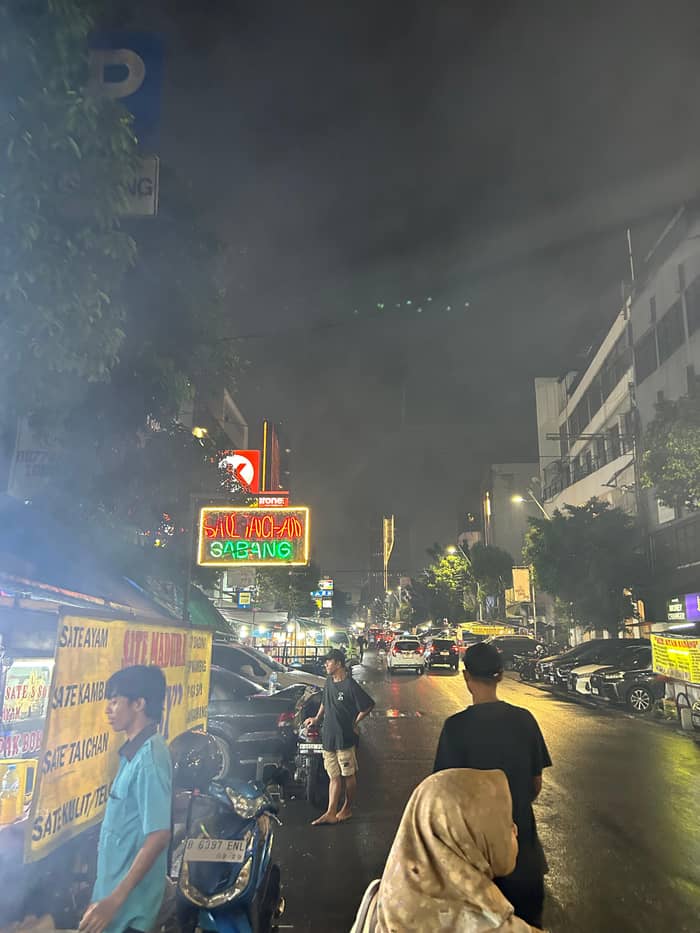
So a halal-certified Chinese Indonesian restaurant displays its certificate, and a non-halal one is supposed to say so. The label may be a sign, a symbol or text on the packaging or menu. Where a label is missing, assume nothing and ask. Glodok, Jakarta's Chinatown, is the district where this question matters most.10
Indonesia Travel describes Glodok as ideal for Chinese Indonesian street food such as bakmi and dim sum.10 Many Muslim visitors eat there happily after checking each stall. A certificate is the best evidence, a halal sign the next best and a spoken assurance from the vendor the minimum, which is why a local guide is worth having in this district.
A safe-eating routine
Before
Use soap and water or an alcohol-based sanitizer.7
Look
A non-halal product must carry non-halal information.3
Order
Raw food is especially likely to be contaminated.4
Drink
Tea and coffee made with just-boiled water are generally safe.5
Season
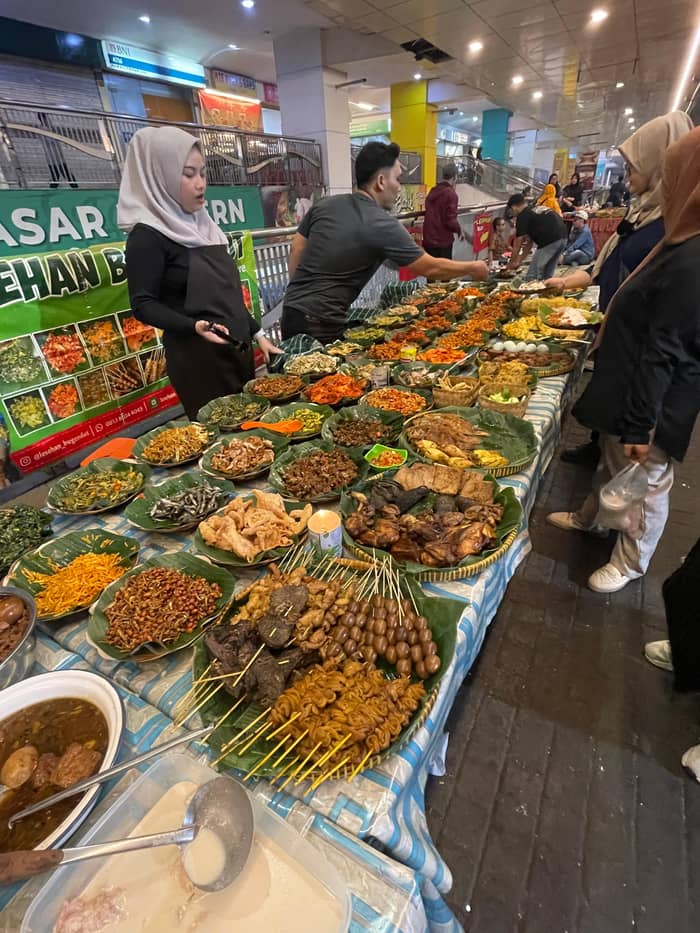
Betawi cooking is spice-forward, so taste first.6
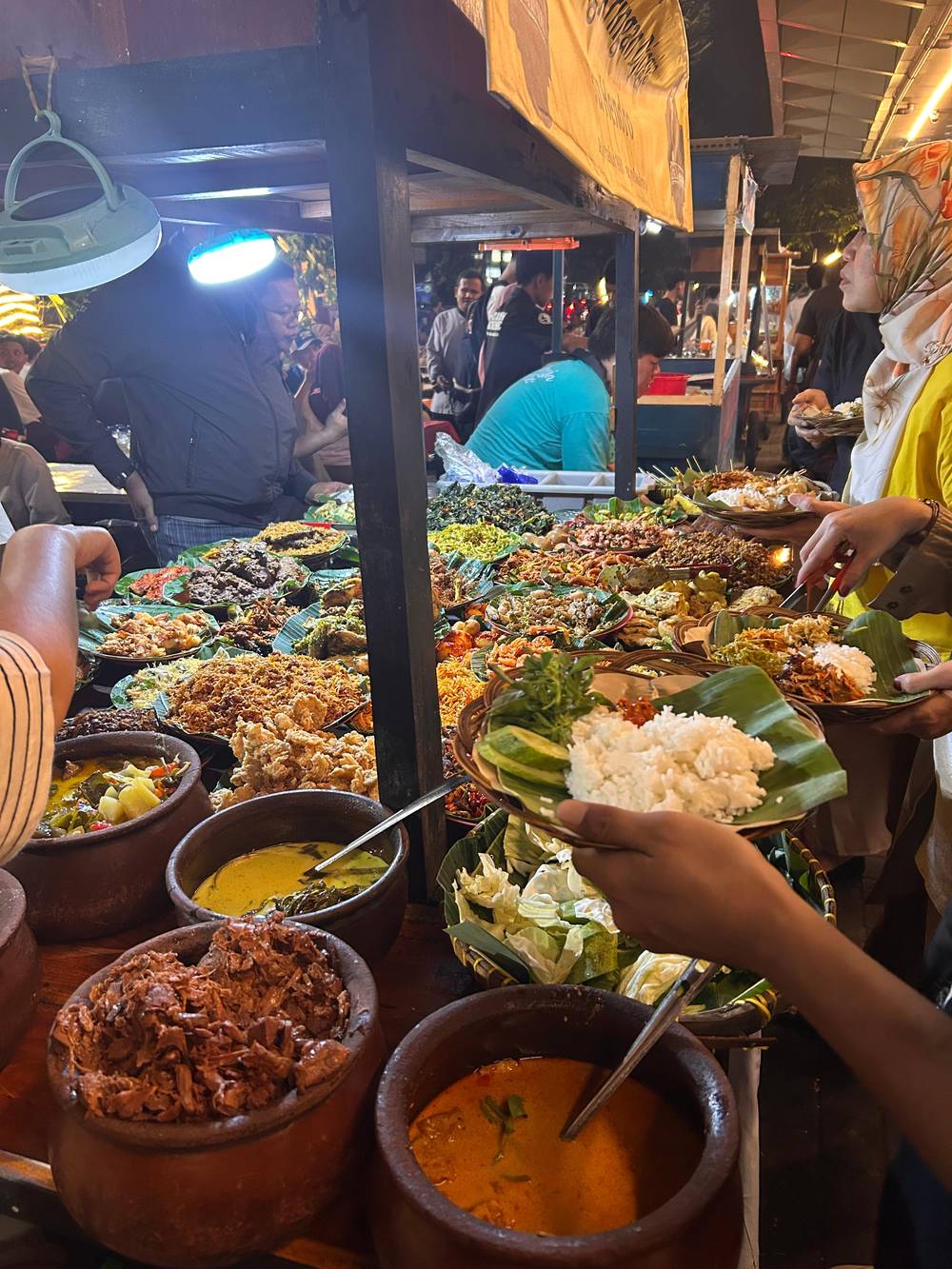
A few habits make the check quick. Look for the halal logo or a certificate on the cart or counter. Look for a non-halal notice, which the law says must appear on a non-halal product.3 If neither is visible, ask the vendor directly whether the dish contains pork, lard or alcohol, and where the broth or oil comes from.
Keep the question short and specific. Is it pork? Is it cooked with alcohol? Does this broth have meat? Most vendors answer in a word. Photos of the dish on your phone help when there is no shared language. A translation app can show the question in Indonesian, and a nod or shake of the head is usually clear.
If you eat with a guide, tell them your needs before the first stop. This site's private night tour lists a live guide in English and seven or more tastings, but the listing says nothing about dietary choices, so send your needs by message when you book. A private format makes the conversation easier than a large shared group.
Match your need
Pick your main concern and read the answer
If I eat only halal
Look for the certificate
Traded products must be halal-certified and non-halal ones labeled.1,3
If I avoid pork
Ask in Chinese Indonesian places
Operators of non-halal products must attach non-halal information.3
If I worry about my stomach
Eat hot food, drink boiled drinks
The CDC says raw food is especially likely to be contaminated.4
If I do not like heat
Add sambal last
Betawi cooking is spice-forward, so taste first.6
If I have an allergy
Tell the operator beforehand
The tour listing does not state dietary options.
Formats and control
Private
Private car, up to 15 travelers
MRT
Guides in English and Indonesian
Small group
Capped at 10 guests
Indonesia Travel calls Betawi cuisine spice-forward, shaped by many cultural interactions.6 Spice-forward does not always mean fiery. It often means layers of aromatics, such as clove, lemongrass, cinnamon and pandan in nasi uduk, which has almost no chili heat in the rice itself.12 The heat usually comes from the sambal served on the side.
That makes spice easy to control. Taste the dish plain first, then add sambal in small amounts. If you are sensitive, ask for the chili separate or leave it out. Peanut sauce, as on gado-gado and siomay, is generally savory rather than hot, though recipes vary by stall and by day.13,14
Soups such as soto Betawi are rich, creamy and moderate in heat. They are made from coconut milk and cow milk and eaten with condiments you add yourself.15 A full day of spice can still tire the stomach, so mix hot dishes with plain rice, steamed items and fruit, and drink water between courses.
What your party pays
Enter your headcount and compare three formats
Line up 3 tours
Enter your headcount and compare three formats
≈
View≈
View≈
ViewStarting prices turned into your currency at the ECB reference rate; the booking page has the exact total.
The US Centers for Disease Control and Prevention gives general food safety guidance for travelers, and it is the best official source for a visitor. Travelers abroad should follow food safety practices recommended in the United States.11 Raw food, including unpasteurized dairy products, is especially likely to be contaminated.4
That points to a simple rule for street food: prefer what is cooked hot in front of you and served immediately, and be careful with raw salads and unpeeled fruit you have not washed yourself. Beverages made with water that has just been boiled, such as tea and coffee, are generally safe to drink.5
Clean hands matter as much as clean food. When soap and water are not available, the CDC recommends an alcohol-based hand sanitizer containing at least 60% alcohol.7 Use it before you eat from a banana leaf or a paper wrapper. None of this guarantees a trouble-free trip, but it reduces the odds meaningfully.
Video
The Chui Show on YouTube · The clip streams from YouTube only after you hit play.
Raw food, including unpasteurized dairy products, is especially likely to be contaminated.
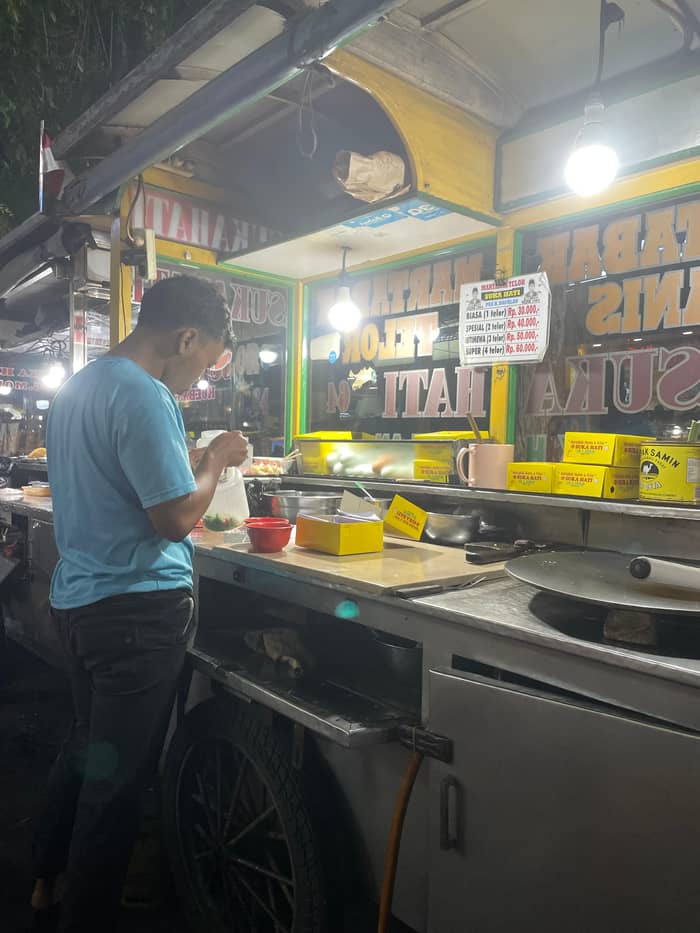
Indonesian cooking uses peanuts, shrimp paste, soy and fish sauce widely, and a dish may contain them without the menu saying so. Peanut sauce, for instance, coats gado-gado and comes with siomay.13,14 Kerak telor is topped with dried shrimp.16 If you have an allergy, say the word clearly in Indonesian or show it written.
Vegetarians have options. Gado-gado is built from vegetables, tofu, tempeh, boiled egg and rice cake, and gorengan includes fried tofu, tempeh, banana and sweet potato.13,17 Check the sauce and the frying oil if you avoid animal products, because vendors may use shared oil or add shrimp paste without mention.
On a guided tour, pass your needs to the operator in advance. The listing for this site's tour has a private format and a booking limit of 15 travelers, which gives a guide room to adapt a menu. The listing does not promise any particular dietary accommodation, so treat a confirmation from the operator as the real answer.
Ramadan changes the rhythm of street food. Indonesia Travel notes that Benhil Street Food near Bendungan Hilir is famous for its Ramadan food market but remains a strong street food destination throughout the year.18 During the fasting month, expect many stalls to prepare for sunset, and treat a crowded market as a cultural moment rather than a queue.
Outside Ramadan, stalls open in the late afternoon in many districts, so lunch and dinner patterns are the same as elsewhere in the city.19 If you are halal-conscious and traveling with others, an early dinner at a certified restaurant and a late snack at a stall you have checked is a flexible split.
Whatever your needs, keep a short phrase list on your phone and a small bottle of sanitizer in your bag. Add a bottle of water, since the climate is warm. With those, Jakarta's food scene is far easier to enjoy than its reputation suggests, and the dishes on our other pages are well within reach.
FAQ
Non-halal products must carry non-halal information, so look for the label.3
The CDC says raw food is especially likely to be contaminated.4
The CDC says beverages made with just-boiled water are generally safe.5
Betawi cuisine is spice-forward, and you can add sambal yourself.6
Use it when soap and water are not available.7
The listing does not state dietary options.
Sources
Keep reading
Questions about the Jakarta night tour? Ask a person here.