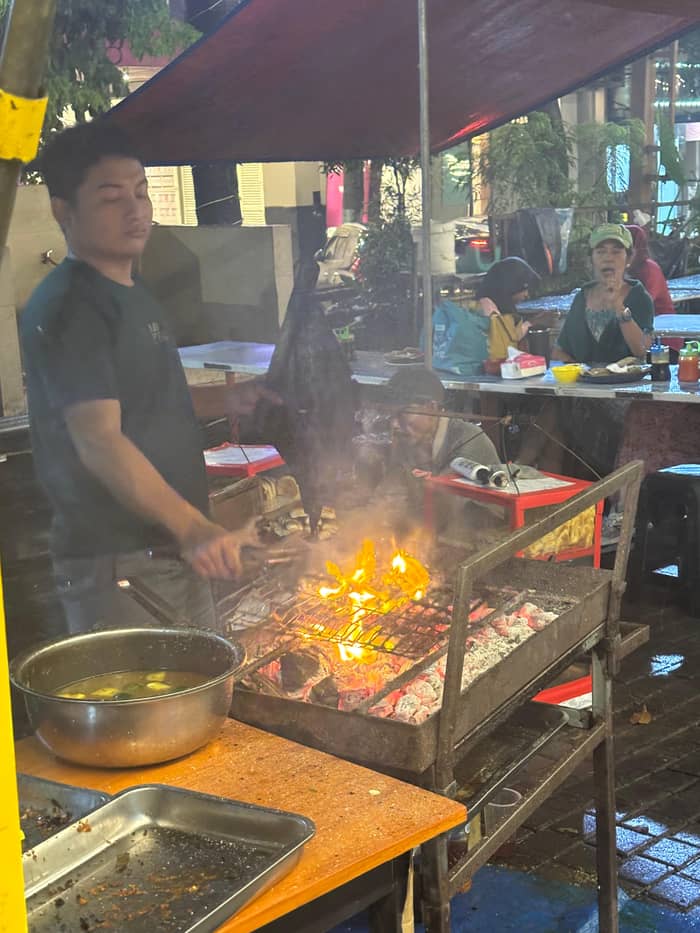
Walk
Chinatown walking tour
On foot and by MRT
- LengthRuns 3 hours
- Rating4.89 from 98
- Pricefrom $41
Find the spot
Brief answer
Glodok is Jakarta's Chinatown, and Indonesia Travel names bakmi noodles and dim sum as the Chinese Indonesian street food it suits best.
Chinatown basics
open the map with 17 stops
Choose a map, then select a pin or a name for its note and a Google Maps link.
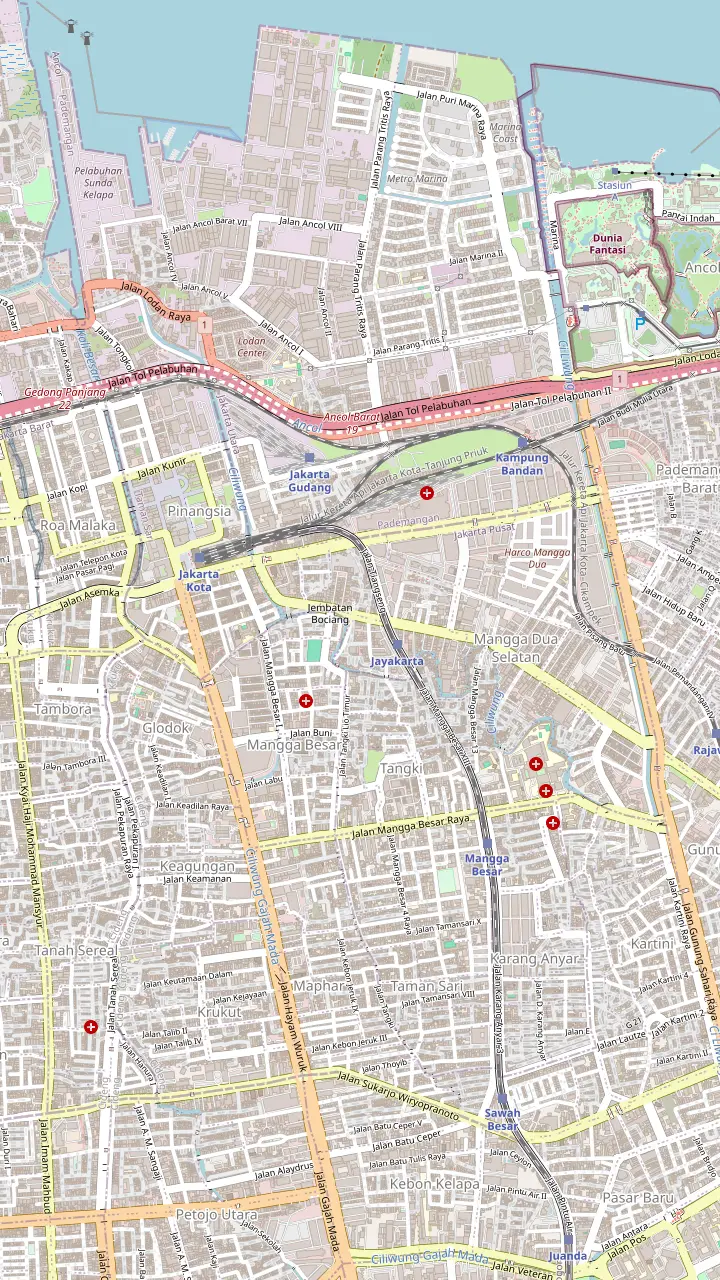
The old town around Fatahillah Square was the trading center of the Dutch colonial era; the square has museums, bicycle rental and street performers.
Google MapsOne of Jakarta's oldest ports, where traditional wooden pinisi ships still dock; the night tour allows 30 minutes here.
Google MapsJakarta's Chinatown, suited to Chinese Indonesian street food such as bakmi and dim sum.
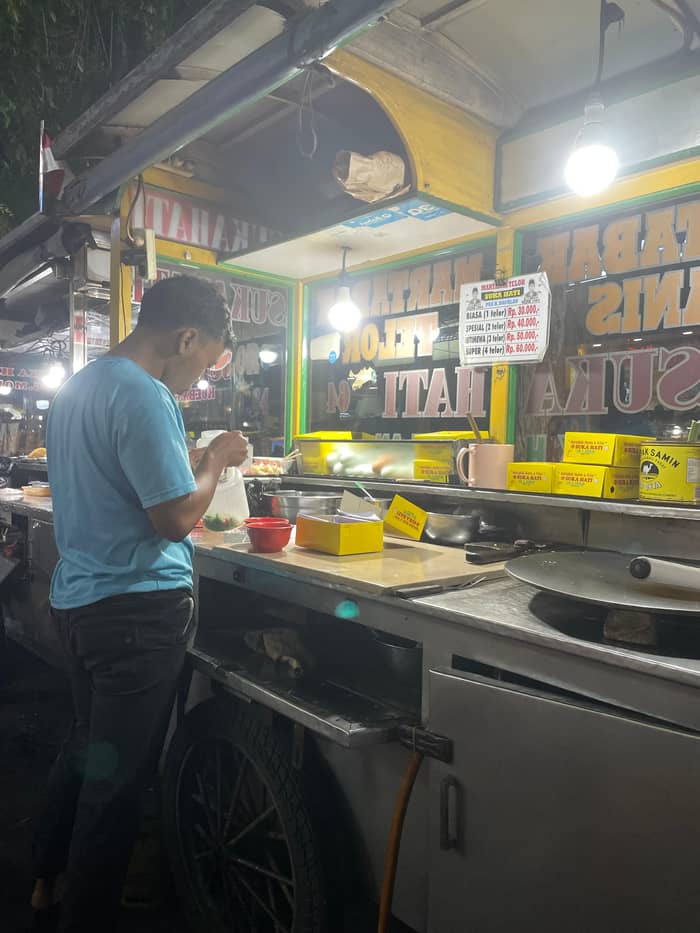
Google MapsThe tour's martabak tasting stop, 30 minutes long, where the listing names cobra satay and durian sellers along the street.
Google MapsThe Sawah Besar area has long been known as a historic culinary district, home to the Bakmi Gang Kelinci noodles.
Google Maps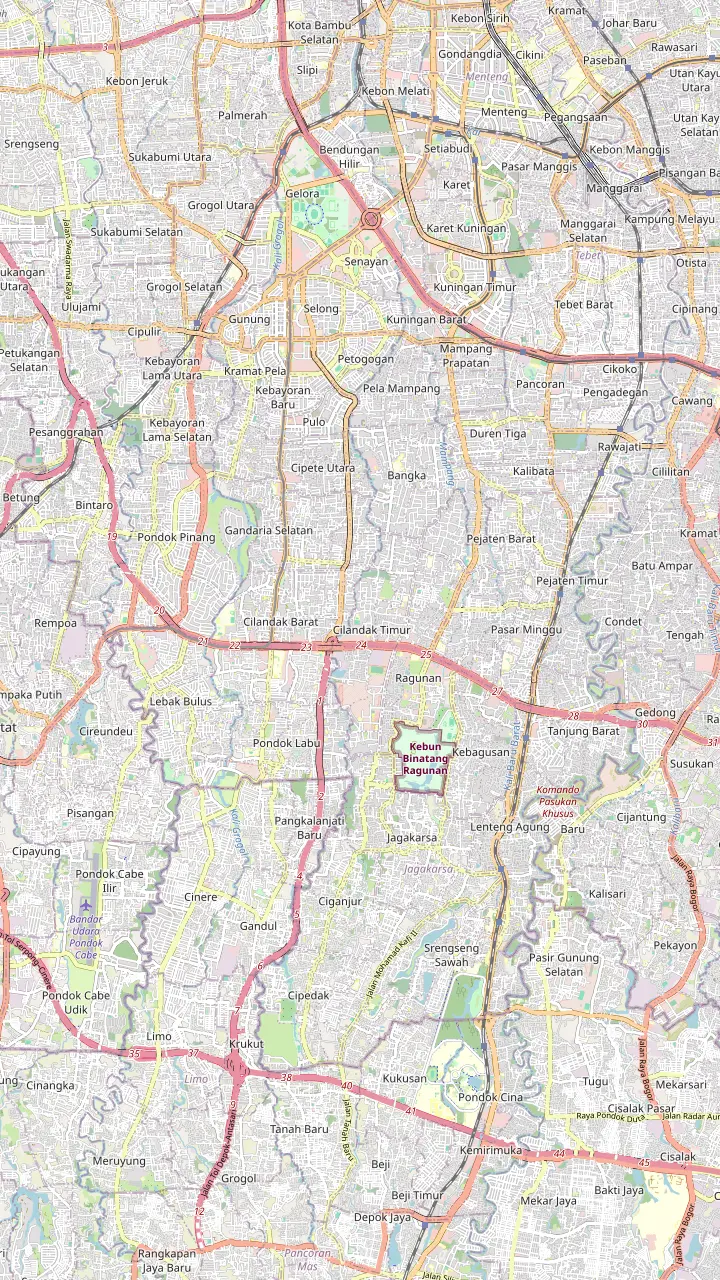
One of Jakarta's busiest nighttime food districts, mixing long-standing street vendors with modern food stalls.
Google MapsTraditional stalls beside trendy food vendors in South Jakarta, open daily from 11:00 to 21:00.
Google MapsA South Jakarta food hub for affordable dishes at lunch and dinner, open daily from about 09:00 to 22:00.
Google MapsJakarta's best-known center of Betawi culture, with traditional houses, performances and Betawi food in one place.
Google Maps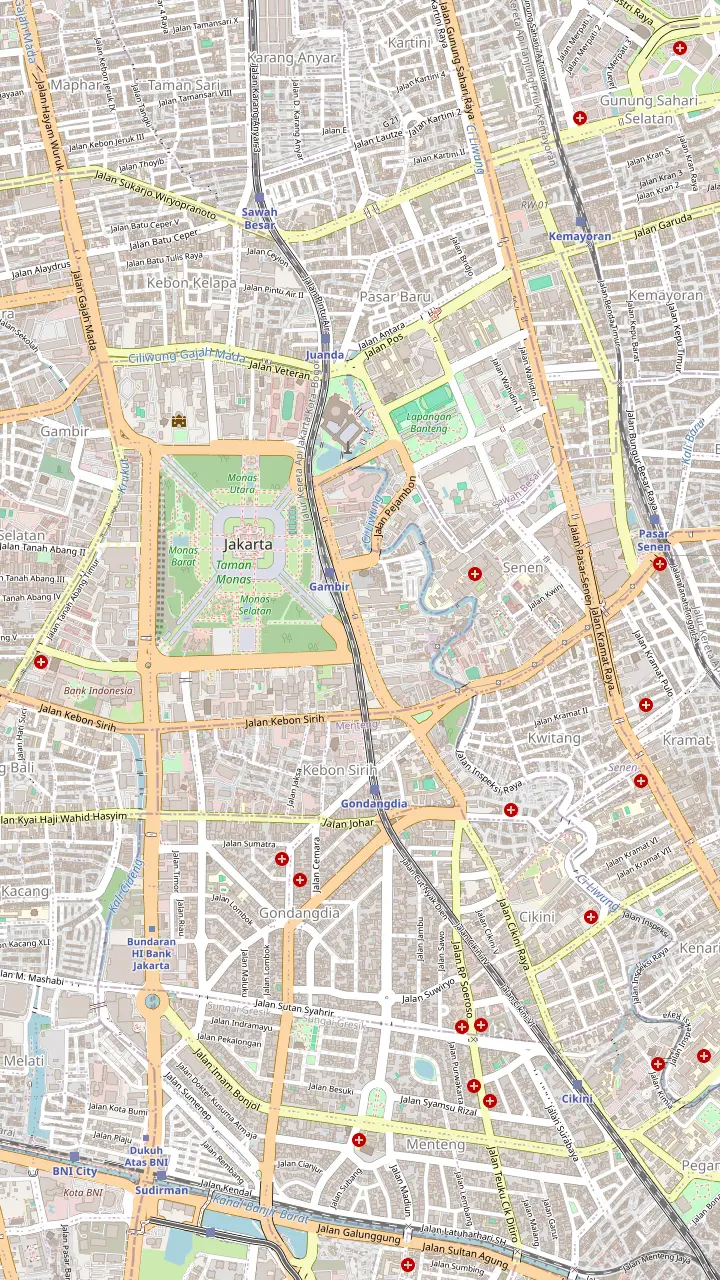
The national monument stands in Merdeka Square, with a museum of dioramas inside and an elevator to an observation deck; the night tour spends 15 minutes here and stays outside.
Google MapsThe mosque opened in 1978 and holds up to 120,000 people; entry is free, guides show non-Muslim visitors around, and the main prayer hall is closed to them.
Google MapsThe Neo-Gothic cathedral stands directly opposite the mosque, and the current building was inaugurated in 1901.
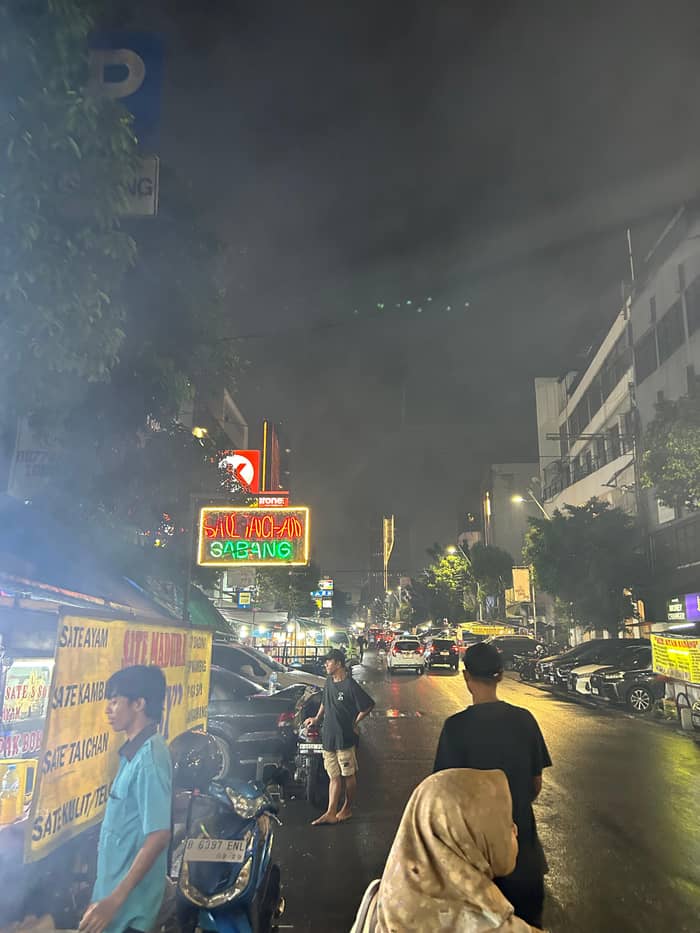
Google MapsThe strip Indonesia Travel calls Jalan Sabang turns into a lively food street at night, with martabak, satay and nasi goreng; the night tour gives it 30 minutes.
Google MapsA nighttime area for Chinese-influenced noodles, porridge and martabak, listed as open from about 06:00 to 23:00 with most stalls opening in the late afternoon.
Google MapsThe start and end point of a shared street-food tour that rides the MRT between South and Central Jakarta.
Google MapsOne of the stops of a 4-hour small-group night walk, with a 20-minute guided visit here.
Google MapsThe Cikini area of Central Jakarta is where Soto Betawi H. Ma'ruf, established in the 1940s, serves its soup.
Google MapsThe Sawah Besar area has long been known as a historic culinary district, home to the Bakmi Gang Kelinci noodles.
Google MapsMap data from OpenStreetMap, © its contributors
Glodok is Jakarta's Chinatown, a district of markets, temples and food streets that sits beside the old town. This page covers what the tourism ministry says to eat, how to combine it with Kota Tua and which tours include a tasting.
Editorial team, foodtourjakarta.com · Updated November 3, 2026 · About 6 minutes to read
the essentials here
Glodok has long been a center of Chinese-Indonesian culture and commerce. Indonesia Travel describes the area as one with traditional markets, historic temples and vibrant culinary streets, and says you can try traditional Chinese-Indonesian dishes and feel the lively atmosphere of one of Jakarta's oldest districts.1 That description is the whole case for visiting hungry.
For food, the ministry's street food guide names Glodok as ideal for Chinese Indonesian dishes such as bakmi, wheat noodles, and dim sum.2 Chinese influence is one of the strands that shape Jakarta's food alongside Betawi, Javanese and Middle Eastern ones, so a visit here fills in part of the picture that a night on Jalan Sabang leaves out.5
Chinatown food in Jakarta is best taken slowly, and a walk through Glodok is the place to start. The streets are narrow, the stalls are packed and a lot of the pleasure is in looking before you buy. Bring small rupiah notes, a hand sanitizer and patience, and let the smell of the cooking decide where you stop.
Glodok and its neighbors
| Area | Best loved for | Listed fact |
|---|---|---|
| Glodok | Bakmi and dim sum2 | Markets, temples, food streets1 |
| Pecenongan | Noodles, porridge, martabak6 | Open about 06:00-23:006 |
| Sawah Besar | Historic culinary district7 | Home of Bakmi Gang Kelinci7 |
| Kota Tua | Museums and street shows3 | Museums IDR 5,000-15,00010 |
| Sunda Kelapa | Pinisi ships at a port4 | IDR 5,000-10,00011 |
Bakmi, the noodle dish, is the classic order, and dim sum covers the steamed and fried small plates.2 If you are new to Indonesian Chinese cooking, expect familiar techniques with local seasoning, since the street food of Jakarta blends Chinese dishes with Betawi and Javanese ones.5
Nearby districts share the taste. Pecenongan is a nighttime area closely associated with Chinese-influenced noodles, porridge and martabak, and the Sawah Besar area is long known as a historic culinary district for noodles.6,7 Combine them with Glodok and you have a three-stop Chinese Indonesian evening.
For a bowl that is not Chinese at all, the ministry's list of Soto Betawi addresses includes Soto Betawi Afung at Gang Gloria in Glodok, West Jakarta.8 That is a coconut milk soup of beef or offal with potatoes and tomatoes, and eating one in Chinatown makes a good point about how mixed the neighborhood's food really is.9
Minutes by stop
Stop lengths come from the walking tour's own listed route; transfers between stops are extra.
Between meals, the temples are worth a look. Indonesia Travel names Vihara Dharma Bhakti among the old temples you can explore in Glodok.1 Treat temples as places of worship, so be quiet, ask before photographing people and follow any signs about shoes or offerings.
Glodok connects naturally to Kota Tua, the old town, whose Fatahillah Square has museums, vintage bicycles and street performers.3 Kota Tua is free to walk, with museum tickets around IDR 5,000 to IDR 15,000, so a food walk through Chinatown followed by an hour in the old town is cheap.10 The two districts sit near each other in West Jakarta.
If you have energy left, Sunda Kelapa Harbor is a short ride north, with traditional pinisi ships docking at one of Jakarta's oldest ports.4 That gives you a route in order: breakfast or lunch in Glodok, the old town for the afternoon and the harbor as the light falls.
Pick the format
Say what you want from the district
If I want the longest tasting time
The on-foot option
It gives Chinatown 1 hour with a food tasting and market visit.
If I want a night walk
Glodok and Kota Tua at night
The listing pairs a food tour with a night walk.
If I want landmarks too
The all-day option
It lists Glodok and Kota Tua among its stops.
If I want to eat on my own
Bakmi and dim sum
Indonesia Travel names these as ideal here.2
If I want to eat halal
Ask at each stall
Non-halal products must carry non-halal information.12
Three Chinatown options
Walk
On foot and by MRT
Night
Private or a few guests
Day
Landmarks plus Glodok
A 3-hour walking tour starting at Capsule Hotel New Batavia rides the MRT for 15 minutes, visits Stasiun Jakarta Kota, takes a 35-minute guided walk, then spends 1 hour in Chinatown with a food tasting and a food market visit. After that it moves by van to Sunda Kelapa for 1 hour and ends at Istiqlal Mosque. It is rated 4.89 from 98 reviews.
A different format is the Chinatown Glodok food tour with a Kota Tua night walk, listed at 4 to 6 hours, private or small groups, with guides in English, Indonesian, French, German and Spanish, from $23. It has 6 reviews and a 4.49 rating, so the evidence is thin, though the multi-language guiding is unusual.
The full-day highlights tour lists Glodok and Kota Tua among seven stops over 7 hours, rated 4.77 from 378 reviews. Choose it if you want landmarks and Chinatown in one day, and choose the walking tour if you want the longest food tasting time in the district.
What your party pays
Enter your headcount and compare four formats
Line up 4 tours
Enter your headcount and compare four formats
≈
View≈
View≈
View≈
ViewStarting prices turned into your currency at the ECB reference rate; the booking page has the exact total.
A walking tour in order
Start
The listing begins at Capsule Hotel New Batavia with a 15-minute MRT ride.
15 minutes
The first visit is the old Kota station.
35 minutes
The guided walk follows the station stop.
1 hour
This stop includes a food tasting and a market visit.
1 hour
A 15-minute van ride leads to the port.
30 minutes
The tour finishes at the mosque.
Our own listing does not list Glodok as a stop. Its eight stops include Sabang Street and Mangga Besar Street, with the latter at 30 minutes and a martabak tasting, and the Dutch colonial canal area and Sunda Kelapa at 30 minutes each. We mention it here because Mangga Besar lies in the northern half of the city, a short drive from Chinatown on the map, so the two make a natural pair for a second night.
That is a reading of geography, not a promise from the listing, so ask your guide whether a short detour is possible. The tour is private, which means the route can sometimes be shaped to interests, though the listing does not state that it will be. Always confirm any change in advance.
The listing is rated 4.86 from 141 reviews and is from $55 with free cancellation up to 24 hours before. If Chinatown is your priority, consider the walking tour above. If landmarks plus tastings is the goal, the night tour is the broader pick.
Video
Janine Freuling on YouTube · The clip streams from YouTube only after you hit play.
Here you can explore old temples such as Vihara Dharma Bhakti, try traditional Chinese-Indonesian dishes, and experience the lively atmosphere of one of Jakarta’s oldest districts.
Before you wander
Many visitors ask whether Chinese food in Jakarta is halal. The answer is that it depends on the stall. Under Indonesia's Law 33 of 2014, products that enter, circulate and are traded in Indonesia must be halal-certified, but business operators whose products come from haram material are excluded from applying and must attach non-halal information to the product.27,28,12
In practice that means a stall selling non-halal food should carry a non-halal notice. If you eat halal, look for the notice or the certification mark, and ask when in doubt. Our halal page explains the rules in more detail and gives a short checklist for ordering in mixed districts.
If you do not avoid pork, Chinatown is where the Chinese Indonesian side of the menu is widest. Either way, the sensible habit is to ask what a dish contains before you order, and a guide can handle that conversation for you in minutes. Allergies, in particular, deserve a clear word.
Start late morning, when stalls are open and the lanes are lively, and eat before the heat peaks. Take a light lunch of noodles or dim sum, then walk to the old town to see Fatahillah Square and, if you like, one museum.3 Keep the afternoon loose so you can stop for tea.
Drink boiled-water beverages such as tea and coffee, which the CDC says are generally safe.29 Carry hand sanitizer for the moments between stalls when you cannot wash.30 Wear comfortable shoes and light clothing; the ministry says walking in Kota Tua or Glodok is the point.31
End at the harbor if you have time, or take a car back to your hotel. Evenings in Jakarta suit the street strips more than Chinatown, so a Glodok-by-day, Sabang-by-night combination gives you two very different faces of the city's food within one day.
FAQ
Indonesia Travel names Glodok as ideal for Chinese Indonesian street food such as bakmi and dim sum.2
It has markets, temples and culinary streets.1
Non-halal products must carry non-halal information under Law 33 of 2014.12
Indonesia Travel names it as an old temple to explore.1
One 3-hour walking tour gives Chinatown 1 hour with a tasting.
Kota Tua has museums, bicycles and street performers.3
That listing has 6 reviews and a 4.49 rating.
Sources
Keep reading
Questions about the Jakarta night tour? Ask a person here.